Key Pointers
- Colorectal polyps are small growths that develop on the inner lining of the colon or rectum.
- Some polyps remain harmless, but certain types can gradually develop into colorectal cancer over time.
- Many people with polyps experience no symptoms, which is why screening is important.
- Colonoscopy allows doctors to detect and remove polyps before they progress.
- Regular screening may help identify early changes in the colon and reduce the risk of colorectal cancer.
What Are Colorectal Polyps?
Colorectal polyps are abnormal growths that develop on the inner lining of the colon or rectum. They can vary in size and shape. Some are flat, while others grow on a stalk similar to a mushroom.
Most polyps begin as benign (non-cancerous) growths, but certain types may gradually change over time.
There are several types of colorectal polyps, including:
- Adenomatous polyps (adenomas) – These are considered precancerous and may develop into colorectal cancer if left untreated.
- Hyperplastic polyps – These are usually small and less likely to become cancerous.
- Serrated polyps – Some forms may carry a higher risk of cancer if they grow larger or remain undetected.
Because polyps may develop slowly over many years, early detection plays an important role in digestive health monitoring.
Can Colorectal Polyps Become Cancerous Over Time?
Yes, some colorectal polyps can develop into colorectal cancer if they remain in the colon for many years.
This process usually happens gradually. In many cases, a polyp may take 10 to 15 years to transform into cancer.
However, not all polyps become cancerous. The likelihood depends on several factors:
- The type of polyp
- The size of the polyp
- The number of polyps present
- Whether abnormal cells are already developing
Because these changes happen slowly and silently, polyps are often discovered during routine digestive investigations rather than through symptoms.
What Symptoms Can Colorectal Polyps Cause?
Many people with colorectal polyps do not experience symptoms.
However, some individuals may notice changes when polyps grow larger or cause irritation in the colon.
Possible symptoms include:
- Blood in the stool
- Changes in bowel habits (constipation or diarrhoea)
- Abdominal discomfort
- Mucus in stool
- Unexplained fatigue related to iron deficiency
These symptoms can also be linked to other digestive conditions, so medical evaluation may be needed to determine the cause.
How Are Colorectal Polyps Usually Detected?
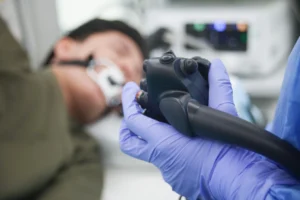
Colorectal polyps are most commonly detected through colonoscopy, a procedure that allows doctors to examine the inner lining of the colon.
During a colonoscopy:
- A thin flexible scope is inserted through the rectum
- The doctor examines the colon for abnormal growths
- Polyps can often be removed during the same procedure
Removing polyps early helps prevent them from continuing to grow or undergoing cellular changes.
Colonoscopy is also commonly used for colorectal cancer screening, particularly for adults over the age of 45 or those with risk factors.
Who Is More Likely to Develop Colorectal Polyps?
Several factors may increase the likelihood of developing colorectal polyps.
These include:
- Age over 45
- Family history of colorectal polyps or colorectal cancer
- Diet high in processed or red meat
- Low fibre intake
- Smoking
- Excess alcohol consumption
- Obesity or sedentary lifestyle
- Chronic inflammatory bowel conditions
Having one or more of these factors does not mean polyps will definitely develop, but it may influence screening recommendations.
Can Colorectal Polyps Be Prevented?
It may not always be possible to prevent polyps entirely, but certain lifestyle habits may support digestive health.
These include:
- Eating a balanced diet rich in fibre, fruits, and vegetables
- Maintaining a healthy body weight
- Staying physically active
- Limiting alcohol intake
- Avoiding smoking
- Attending recommended screening examinations
Regular screening remains one of the most effective ways to detect polyps early.
When Should You See a Gastroenterologist for Colon Screening?
It may be advisable to consult a gastroenterologist if you experience:
- Blood in your stool
- Persistent changes in bowel habits
- Unexplained abdominal discomfort
- A family history of colorectal cancer
- Symptoms such as unexplained weight loss or fatigue
Even without symptoms, screening is recommended starting age 45 for the average person but is earlier if there is a family history of colorectal cancer or certain genetic conditions.
A consultation can help determine whether tests such as colonoscopy are appropriate based on your health history and risk factors.
Frequently Asked Questions
1. Are all colorectal polyps cancerous?
No. Many polyps remain benign and never become cancerous. However, certain types, particularly adenomatous polyps, may carry a higher risk over time.
2. How long does it take for a polyp to turn into cancer?
The progression from a polyp to colorectal cancer typically takes many years, often around 10–15 years. Early detection allows polyps to be removed before changes occur.
3. Can polyps grow back after removal?
New polyps can develop over time even after previous ones have been removed. This is why follow-up screening may be recommended.
4. Do colorectal polyps always cause symptoms?
No. Most polyps do not cause noticeable symptoms
5. Is colonoscopy the only way to detect polyps?
Colonoscopy is one of the most reliable methods because it allows doctors to both detect and remove polyps during the same procedure.
Concerned About Colorectal Polyps?
Early Detection Matters, Book a Consultation
Colorectal polyps often develop silently and may not cause symptoms in their early stages. Detecting them early allows appropriate monitoring or removal before further changes occur.
If you have concerns about digestive symptoms or are considering colon screening, a consultation can help you understand your options.
Dr Lin Cui Li, a gastroenterologist at Mount Elizabeth Medical Centre, sees patients with digestive symptoms and provides assessment for conditions affecting the colon and digestive system.
GastroClinic is located at:
3 Mount Elizabeth, #06-10 Mount Elizabeth Medical Centre, Singapore.
Concerned about persistent digestive symptoms or considering colon screening?
Book a consultation to discuss whether a colonoscopy or digestive evaluation may be suitable for you.